Keynote Speakers

Dr Mario Blaser
Departments of Archaeology, Anthropology and Geography
Memorial University of Newfoundland-St John’s, Canada
Mario Blaser is a professor at Memorial University of Newfoundland. Originally from Argentina, he made the city of St. John’s (Newfoundland and Labrador, Canada) his home, where he lives with his two children and his partner.
Anthropologist by training and undisciplined by vocation, has worked with the Yshiro nation of Paraguay since his undergraduate studies days and with Innu Nation of Labrador since 2009, although, as of late, has started to work closer to home in the city of St. John’s with local initiatives that might strengthen what he calls infrastructures of emplacement, his most recent obsession.
He is the author of Storytelling Globalization from the Paraguayan Chaco and Beyond (Duke University Press, 2010) and co-editor of A world of Many World (Duke University Press 2018); Indigenous Peoples and Autonomy: Insights for the Global Age (University of British Columbia Press, 2010) and In the Way of Development: Indigenous peoples, Life Projects and Globalization (Zed Books 2004).
His upcoming book For Emplacement: An Essay of Political Ontology (with Duke University Press) examines the challenges of articulating heterogeneous life projects under the shadow of the Anthropocene.

Dr Paula Bruna Pérez
Ecological and Forestry Applications Research Centre CREAF-UAB
Paula Bruna (Barcelona, 1978) is an environmentalist and artist based in Barcelona. She holds a PhD in Fine Arts (University of Barcelona) and a degree and master’s degree in Environmental Sciences (Autonomous University of Barcelona). Paula’s research is focused on the relationship between human society and our ecological environment from non-human perspectives.
Her main hypothesis is that exploring points of view other than current anthropocentrism provides knowledge, affects ecological awareness, and opens the range of possible forms of coexistence.
In her research, Paula uses a combination of science-based, speculative fiction, and artistic practices to approach non-human perspectives. Recently, she has developed projects such as The Plantocene, a story about the Anthropocene explained from the plants’ perspective; Ecofictions, where speculative multi-species scenarios that happen in a non-linear time are presented as a response to imaginaries of a catastrophic future; The Other Residents, where daily stories of non-humans with whom we cohabitate are highlighted; or La Forêt Noire, which discusses the forest as an entity that observes and knows us with attraction and fear.
Paula invites us to embrace a conscious coexistence without ignoring the conflicts and fears. Far from the anthropomorphisation of the other, Paula calls for the need to deanthropomorphize our society for a better understanding of the environment and ourselves as part of it.
The results of her research have been presented at conferences, publications and workshops. Her artwork has been shown in places such as La Capella (Barcelona), Center for Contemporary Culture of Barcelona CCCB (Barcelona), Extremadura and Ibero-American Museum of Contemporary Art MEIAC (Badajoz), Kunstraum Lakeside (Klagenfurt, Austria) or International Festival Projector (Madrid). Several artistic research grants from the University of Barcelona, Barcelona City Council, and the regional government of Catalonia have supported her work.
She recently received the Leonardo-BBVA grant for researchers and cultural creators to develop her project Embolismo por Soleá, in which trees and humans talk about climate change using flamenco as a language mediator. She is a postdoctoral researcher at the Ecological and Forestry Applications Research Centre, CREAF-UAB.
Dr Donatella della Porta
Center on Social Movement Studies (Cosmos)
Scuola Normale Superiore
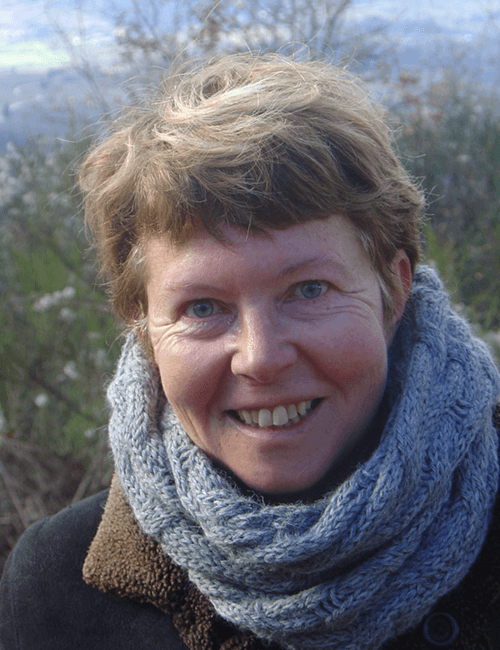
Donatella Della Porta is professor of political science, dean of the Faculty of Political and Social Sciences and Director of the PhD program in Political Science and Sociology at the Scuola Normale Superiore in Florence, where she also leads the Center on Social Movement Studies (Cosmos).
Among the main topics of her research are social movements, political violence, terrorism, corruption, the police and protest policing. She has directed a major ERC project Mobilizing for Democracy, on civil society participation in democratisation processes in Europe, the Middle East, Asia and Latin America. In 2011, she was the recipient of the Mattei Dogan Prize for distinguished achievements in the field of political sociology. She is Honorary Doctor at five universities: Lausanne, Bucharest, Goteborg, Jyvaskyla and the University of Peloponnese.
She is the author or editor of 90 books, 150 journal articles and 150 contributions in edited volumes. Her most recent publications are: Social Movements: An introduction, 3rd edition (Blackwell, 2020); Can Social Movements Save Democracy? (Polity, 2020), Über das Potenzial sozialer Bewegungen Die schoene neue Demokratie. Ueber das potentiale soziale Bewegungen (Campus Verlag, 2020), with Lorenzo Cini and Cesar Guzman, Contesting Higher Education (Bristol University Press, 2020), with Pietro Castelli Gattinara, Andrea Felicetti, Konstantinos Eleftheriadis, Discoursive Turns and Critical Junctures, Oxford University Press, 2020); Legacies and Memories in Movements (Oxford University Press, 2018); Sessantotto. Passato e presente dell’anno ribelle (Fertrinelli, 2018); Contentious moves (Palgrave 2017), Global Diffusion of Protest (Amsterdam University Press, 2017); Late Neoliberalism and its Discontents (Palgrave, 2017); Movement Parties in Times of Austerity (Polity 2017); Where did the Revolution go? (Cambridge University Press, 2016); Social Movements in Times of Austerity (Polity 2015); Methodological practices in social movement research (Oxford University Press, 2014); Spreading Protest (ECPR Press 2014, with Alice Mattoni); Participatory Democracy in Southern Europe (Rowman and Littlefield, 2014, with Joan Font and Yves Sintomer); Mobilizing for Democracy (Oxford University Press, 2014); Can Democracy be Saved?, Polity Press, 2013; Clandestine Political Violence, Cambridge University Press, 2013 (with D. Snow, B. Klandermans and D. McAdam (eds.); Blackwell Encyclopedia on Social and Political Movements, Blackwell, 2013; Mobilizing on the Extreme Right (with M. Caiani and C. Wagemann), Oxford University Press, 2012; Meeting Democracy (ed. With D. Rucht), Cambridge University Press, 2012; The Hidden Order of Corruption (with A. Vannucci), Ashgate 2012.

Dr Rebecca Elliott
London School of Economics
Rebecca Elliott is an Associate Professor of Sociology at the London School of Economics. At LSE, Dr Elliott is a Research Associate at the Grantham Research Institute on Climate Change and the Environment and at the LSE Centre for the Analysis of Risk and Regulation. She is a Faculty Affiliate of the LSE Phelan United States Centre.
Her research focuses on how climate change, as a material and symbolic phenomenon, reshapes social and environmental landscapes.
She is the author of Underwater: Loss, Flood Insurance, and the Moral Economy of Climate Change in the United States (Columbia University Press, 2021). Underwater was the co-winner of the 2022 Viviana Zelizer Book Award from the Economic Sociology Section of the American Sociological Association, and received an Honourable Mention for the 2022 Alice Amsden Book Award from the Society for the Advancement of Socio-Economics.
In addition to publishing in academic journals, she has contributed to The New York Times, The Houston Chronicle, and Harper’s Magazine.
She is a recipient of the 2023 Philip Leverhulme Prize in Sociology.

Dr Roger Malina
University of Texas at Dallas
Leonardo Publications, MIT Press
Roger Malina is a physicist, astronomer, Executive Editor of Leonardo Publications at MIT Press, distinguished professor at UT Dallas and Associate Director of Arts and Technology. His work focuses on connections among digital technology, science and art. He is the ATEC Program Associate Director at The University of Texas at Dallas. Malina has been awarded an Honorary Degree (Doctor Honoris Causa) from the Technical University of Valencia in Spain for his work promoting and advancing research at the intersection of art, science and technology. He is also a publisher and editor in emerging research fields that connect the sciences and engineering to the arts, design and humanities. He founded and serves on the board of two non-profits, ISAST in San Francisco and Olats in Paris.
Roger Malina obtained his BS in physics from Massachusetts Institute of Technology in 1972 and his PhD in Astronomy from the University of California, Berkeley in 1979. He was the Principal Investigator for the NASA Extreme Ultraviolet Explorer Satellite at the University of California, Berkeley.
He is the former director of the Observatoire Astronomique de Marseille Provence (OAMP) in Marseille, and a member of its observational cosmology group, which investigates the nature of dark matter and energy. Furthermore, he is a Directeur de Recherche in the CNRS at the University of Aix Marseille.
Malina is president of the Leonardo Association in France, which fosters connections between the arts, sciences, and technology. He has also been the editor-in-chief of Leonardo Journal at MIT Press since 1982.
He is a member of the Mediterranean Institute for Advanced Study (Institut Méditerranéen de Recherches Avancées, IMERA), an institute he helped set up. IMERA aims to contribute to interdisciplinarity and emphasises the human dimensions of the sciences.
More information at: https://profiles.utdallas.edu/roger.malina

Dr Michael Marder
Ikerbasque Professor
Universidad del País Vasco / Euskal Herriko Unibertsitatea
Michael Marder is a Research Professor at the Basque Foundation for Science (Ikerbasque) in the Department of Philosophy, University of the Basque Country/ Euskal Herriko Unibertsitatea, Vitoria. He studied at various universities in Canada and the USA and received his Ph.D. in Philosophy from the New School for Social Research in New York.
Marder did post-doctoral research in the Department of Philosophy at the University of Toronto, and taught at Georgetown University, George Washington University, and the University of Saskatchewan.
Shortly before accepting the Ikerbasque research chair at the University of the Basque Country, Marder developed research in phenomenology as an FCT associate at the University of Lisbon, Portugal, and held the position of Professor in the Department of Philosophy at Duquesne University, Pittsburgh.
Marder works in the phenomenological tradition of continental philosophy, environmental thought, and political philosophy and develops a philosophy regarding plants. He argues that although many philosophers seek to withdraw from ontological and ethical concerns regarding plants, it is necessary to place this life form at the forefront of the deconstruction of Western metaphysics. Recently, Marder has written about the ethical implications of what he called plant thinking.
Moreover, he contributed to contemporary political thought, phenomenology, utopian theory and deconstruction, with original research on Jacques Derrida, Carl Schmitt, the role of critique in the phenomenological tradition and Piropolitics, or the politics of fire.
Marder is a member of the Consolidated Research Group: Social Change, Emerging Forms of Subjectivity and Identity in Contemporary Society [IT1469-22] and associate editor of the journal Telos (New York), editor of three book collections: Political Theory and Contemporary Philosophy, Critical Plant Studies, and Perfect Future: Images of the Future Tense in Philosophy, Politics, and Cultural Studies.
His work is widely published and can be accessed via this link: michaelmarder.org
Dr Paola Mercogliano
President of the Italian Climatology Society
Euro-Mediterranean Centre on Climate Change
Advanced Meteorology at the University of Naples Parthenope
Horizon Europe AGORA project
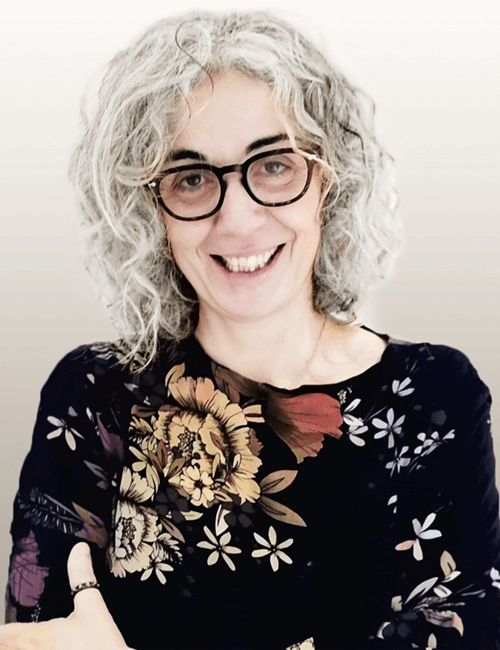
Paola Mercogliano is a distinguished scientist with over 16 years of experience at the CMCC (Euro-Mediterranean Centre on Climate Change), as detailed on their website: https://www.cmcc.it/it. Specialising in meteorology, climatology, and climate change impacts, she currently holds the position of Director of the REMHI Division.
In addition to her pivotal role at CMCC, Paola is an Adjunct Professor of Advanced Meteorology at the University of Naples Parthenope. Notably, she was elected President of the Italian Climatology Society for 2025-2026.
Paola’s expertise spans various domains, encompassing the development of Numerical Weather Prediction (NWP) and high-resolution climate models, atmospheric model post-processing, and formulating climate risk assessment and adaptation strategies. She actively participates in projects addressing climate change adaptation, risk assessment, and enhancing weather and climate services. As the CEO of Dataclime Climate Service (www.cmcc.it), Paola oversees contributions that advance climate science and services.
Her leadership is evident in her involvement in numerous projects, including leading the Horizon Europe AGORA project (https://adaptationagora.eu/) and fostering collaborations with entities such as the Municipality of Rome, Agenzia del Demanio, Acquedotto Pugliese S.p.a., and Terna S.p.a. Paola is also at the forefront of pioneering projects like the AI-GCM (Artificial Intelligence General Circulation Model), exploring the potential of deep learning techniques in weather forecasting.
Paola’s contributions extend to various sectors, including infrastructure, mobility, and energy, where she engages in adaptation analysis and risk assessment activities. Her advisory roles for government bodies, including the Italian Ministry of Sustainable Infrastructures and Mobility and the Italian Ministry of the Environment and Energy Security, underscore her commitment to supporting adaptation and sustainable development policies.
With extensive experience in national and European projects, Paola actively disseminates knowledge through seminars, technical meetings, and collaborative initiatives, emphasising her dedication to resilience in climate change. For more information about Paola Mercogliano, visit her profile on the CMCC website: https://www.cmcc.it/it/people/mercogliano-paola